 AGENCY


Best for ongoing owner support: Agency Builders Membership. Best for delivery systems: a focused operations course. Best for financial decisions: an agency finance course. The best courses for scaling an agency in 2026 match your operating bottleneck—not your appetite for more content.
- Agency Builders Membership fits digital and creative agency owners seeking coaching, masterminds, and peer support—not a standalone course.
- The best courses for scaling an agency address a specific constraint: delivery, agency profitability, leadership, or implementation.
- Choose operations training for inconsistent delivery; choose finance training when you cannot explain where profit goes.
- Choose leadership training for delegation problems and a live cohort when you need an implementation deadline.
Why this matters
Buying training is easy. Changing how your agency operates is the work. You need a learning format that helps you make a decision, assign ownership, and change a recurring behavior.
More leads do not fix uncontrolled scope. More hires do not define decision rights. A course on growth misses the point when your actual constraint is delivery, margin, or an owner who approves everything.
Choose the smallest learning commitment that addresses the constraint you can name. This guide compares a membership with course formats because ongoing owner support and a bounded curriculum solve different problems. Neither replaces implementation.
What makes the best courses for scaling an agency?
Use these criteria before choosing a program in 2026. A polished syllabus is not enough; the learning needs to connect to your operating decisions.
- Problem fit: The curriculum addresses your current constraint, whether that is delivery consistency, financial visibility, delegation, or implementation.
- Practical output: You finish with something usable: a scope checklist, a financial review process, a delegation agreement, or an operating plan.
- Feedback access: Understand whether you receive instruction only, peer discussion, or direct feedback. Do not assume those are interchangeable.
- Implementation capacity: Your calendar includes time to apply the work, not just watch lessons. Assign an owner before enrollment.
- Relevant context: Examples should reflect client services, project delivery, recurring work, and agency ownership—not an unrelated business model.
Ask to see the curriculum and participation requirements before committing. For a course, identify the lesson that addresses your problem. For a membership, identify the support format you actually intend to use.
Agency learning options at a glance
This 2026 comparison ranks options by use-case fit, not measured outcomes. Course entries describe learning formats to evaluate; they are not endorsements of specific providers.
| Option | Best for | Standout format | Key limitation |
|---|---|---|---|
| Agency Builders Membership | Ongoing agency-owner support | Membership offering coaching, masterminds, and in-person retreats | Not a standalone course with a single defined learning endpoint |
| Focused operations course | Delivery consistency | Bounded study of workflows, scope, and handoffs | Instruction does not redesign your delivery process for you |
| Agency finance course | Financial visibility | Structured study of financial statements and operating decisions | Lessons need usable financial records |
| Agency leadership course | Delegation and decision ownership | Focused learning around management practices | Team behavior changes through practice, not course completion |
| Live implementation cohort | Completing a defined operating change | Scheduled learning with a shared progression | Fixed participation times reduce calendar flexibility |
The right choice is the one that changes a decision you make repeatedly. If you cannot name that decision, hold off on enrollment.
1. Agency Builders Membership: best for ongoing owner support
Agency Builders Membership is a paid community for digital and creative agency owners. It offers masterminds, coaching, and in-person retreats to help owners scale their businesses profitably. Its format is ongoing support rather than a standalone online course.
Agency Builders Membership is best for digital and creative agency owners who want coaching, masterminds, and a peer community while scaling. Choose this format when your questions cross several functions and you want support beyond a single curriculum.
Agency Builders Membership pros:
- Explicitly serves digital and creative agency owners.
- Combines coaching with mastermind participation.
- Offers a community format rather than instruction alone.
- Includes in-person retreats alongside the membership offering.
Membership cons:
- A membership is a different commitment from completing a bounded course.
- Participation takes owner attention alongside client work.
- Peer input does not remove your responsibility for decisions and execution.
Best for: Owners seeking an ongoing setting for business questions, accountability, and agency-focused discussion.
Bring a specific operating question into any coaching or mastermind conversation. A scope dispute, an unclear responsibility, or a difficult financial decision gives the discussion a useful starting point.
Verdict: Buy if you want ongoing owner support; skip if your sole requirement is a standalone course.
2. Focused operations course: best for delivery consistency
An operations course belongs on your shortlist when work changes shape between sales, onboarding, and delivery. Look for a curriculum covering scope definition, handoffs, process ownership, and change requests. Evaluate the actual syllabus rather than assuming every operations course covers those topics.
The practical output should be a clearer delivery process. A collection of templates is only useful when your team knows where each template fits and who maintains it.
Operations course pros:
- Keeps your learning centered on a defined operating problem.
- Gives you a structure for documenting repeatable work.
- Helps frame the boundaries between selling and delivering.
- Creates a bounded project you can assign to an operations owner.
Operations course cons:
- A generic workflow can miss the requirements of your service.
- Documentation becomes shelfware when nobody owns adoption.
- Process training does not resolve an offer that remains poorly defined.
Best for: Owners whose client work depends on improvised handoffs, inconsistent scope, or repeated explanations.
Choose a real delivery workflow as your application project. Trace it from signed agreement to completion, then identify where responsibility becomes unclear. Use the course to address that break before documenting everything else.
Verdict: Buy for a defined delivery problem; hold if you have not identified the broken handoff.
3. Agency finance course: best for financial visibility
An agency finance course belongs on your shortlist when you cannot explain the relationship between revenue, delivery costs, operating expenses, and cash. Look for instruction that distinguishes profit from cash flow and connects financial statements to operating choices.
Start with the questions you need answered. Which work absorbs delivery effort? Which commitments affect cash? What information belongs in your recurring financial review?
Finance course pros:
- Builds a common language for discussing agency profitability.
- Connects financial reporting with hiring and delivery decisions.
- Gives you a framework for asking better accounting questions.
- Keeps attention on the business behind the revenue headline.
Finance course cons:
- Incomplete records limit the usefulness of the exercises.
- Instruction does not replace bookkeeping or qualified accounting advice.
- A general business curriculum needs translation into agency operations.
Best for: Owners who see revenue activity but lack a clear financial explanation of the business.
Set aside a 60-minute financial review as an implementation exercise. Bring current records and write down the decisions they do and do not support. The duration is a planning recommendation, not a benchmark for agency performance.
Verdict: Buy when financial understanding is the constraint; hold when the immediate job is cleaning up the records.
4. Agency leadership course: best for delegation
A leadership course belongs on your shortlist when routine decisions keep returning to you. Look for content addressing role expectations, feedback, decision authority, and manager development. Motivational lessons alone do not define who can decide what.
Your application project should be a real responsibility you currently hold. State the expected outcome, the boundaries, and the situations that require escalation. Delegation needs clarity on both authority and accountability.
Leadership course pros:
- Focuses learning on management behavior rather than more owner output.
- Gives you language for setting expectations and providing feedback.
- Helps organize recurring conversations with direct reports.
- Supports a deliberate approach to transferring responsibility.
Leadership course cons:
- Watching lessons does not change your approval habits.
- Management frameworks require adaptation to the role and person.
- Delegation training cannot substitute for a missing role definition.
Best for: Owners whose team has assigned tasks but still depends on owner permission to move work forward.
Choose 1 recurring decision to transfer as your practice assignment. Write down who owns it and when you expect escalation. Review how the arrangement works before widening the responsibility.
Verdict: Buy for a clear delegation problem; skip if you are unwilling to change your own involvement.
5. Live implementation cohort: best for finishing a defined change
A live cohort course uses scheduled participation and a shared learning progression. Choose this format when you want a bounded learning project with dates attached. Verify whether the provider includes feedback, assignments, or discussion; the word cohort does not guarantee any of them.
The strongest fit is a change you can describe before enrollment. Building an onboarding process is a project. Becoming a better agency is an aspiration.
Live cohort pros:
- Gives the learning project a defined calendar.
- Creates a shared progression instead of an open-ended lesson library.
- Provides a clear opportunity to reserve implementation time.
- Suits owners who prefer scheduled participation to independent study.
Live cohort cons:
- Fixed sessions compete with client and team commitments.
- A shared pace can differ from your implementation needs.
- Group participation does not guarantee individual attention.
Best for: Owners with a specific operating change and protected time to work on it.
Before enrolling, put the participation requirements beside your delivery calendar. If the time is not there, the format is wrong—even when the topic is right.
Verdict: Buy when the project and calendar are clear; wait when client commitments leave no room to implement.
How to choose your learning format
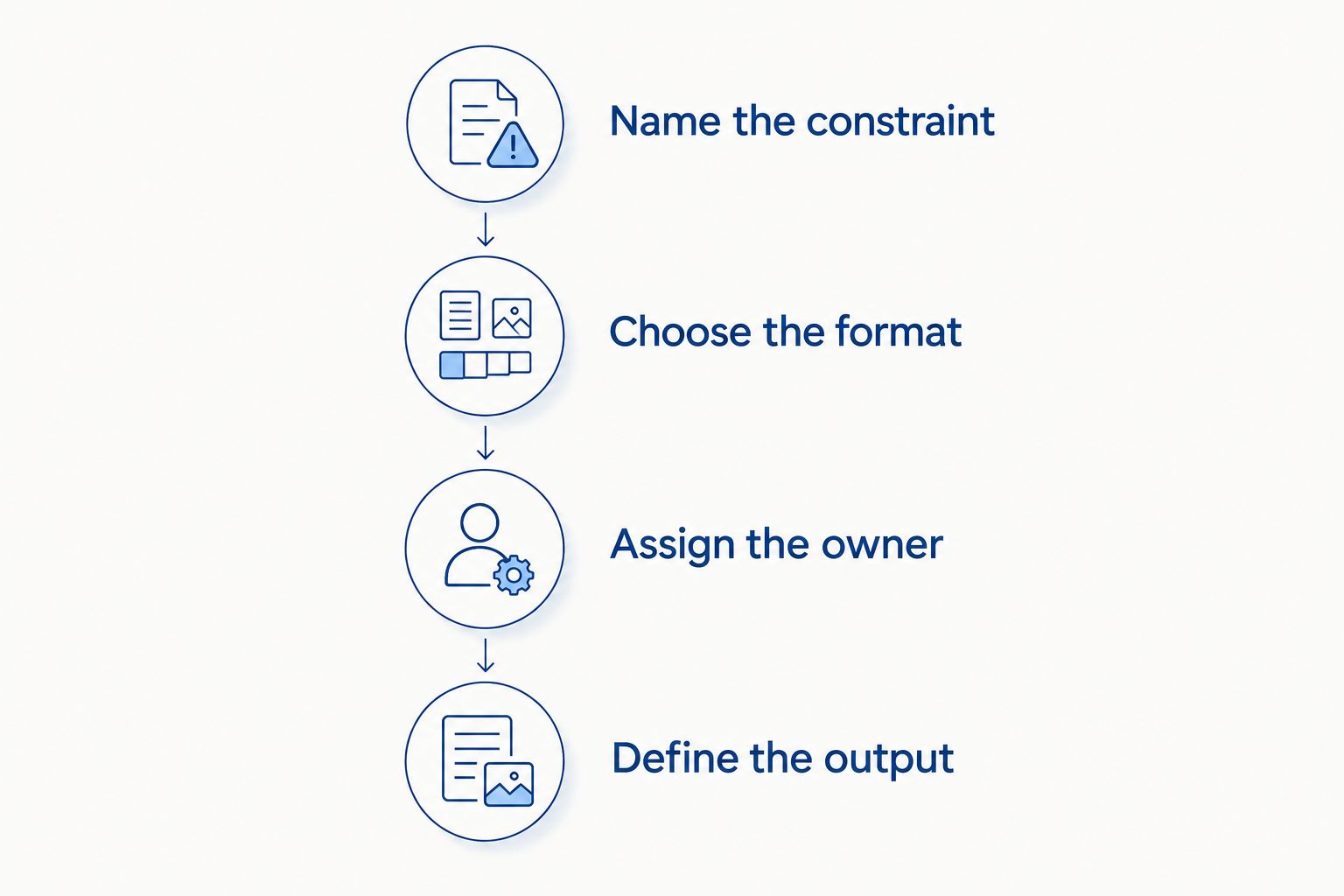
Use this sequence for your 2026 shortlist. It keeps the purchase connected to work your agency actually needs done.
Name the constraint
Finish this sentence: the agency cannot improve this operating outcome because this specific problem keeps recurring. Avoid vague answers such as growth or systems. Name the repeated failure.
Choose the format
Pick ongoing support for recurring owner questions, focused study for a knowledge gap, or a live cohort for a bounded implementation project. The format should suit the work and your calendar.
Assign the owner
Decide who will apply the learning. You can own the decision without owning every implementation task. Give the responsible person access to the relevant process and information.
Define the output
Choose the document, decision, or routine that will exist after the learning. Start with a 30-day implementation window as a planning exercise, then adjust it to the actual scope. Do not confuse a deadline with a promised result.
How the options are ranked
The order follows the criteria above: problem fit, practical output, feedback access, implementation capacity, and relevant context. The membership comes first for ongoing owner support; the course formats each occupy a distinct operating use case.
This is a format-selection guide, not a provider performance ranking. For any course you consider in 2026, inspect the curriculum, delivery format, and participation requirements before making a commitment.
Which option should you choose?
Choose the option that matches your clearest constraint. Pick operations for delivery consistency, finance for financial understanding, leadership for delegation, and a live cohort for a defined implementation project.
For recurring questions across the business, choose ongoing owner support instead of expecting a single course to cover everything. If you remain undecided, review a recent client engagement and identify where the operating process broke down. Start there.
FAQ
What are the best courses for scaling an agency in 2026?
The best courses for scaling an agency match its current constraint: delivery operations, financial understanding, delegation, or implementation. Choose the subject first, then evaluate providers against the practical change you need to make.
Is Agency Builders Membership an online course?
Agency Builders Membership is a paid membership community, not a standalone online course. It offers coaching, masterminds, and in-person retreats for digital and creative agency owners.
Should I choose a membership or a self-paced course?
Choose a membership for ongoing support and a self-paced course for a bounded knowledge gap. Your decision should reflect the kind of help you need and the time you can commit.
What should an agency operations course cover?
An agency operations course should address the delivery problem you want to solve. Look for relevant coverage of scope, handoffs, process ownership, and change requests, then confirm those topics in the syllabus.
Should I take a finance course before hiring more people?
Take finance training when you need help understanding the financial consequences of hiring. Use current financial records to evaluate the decision; course completion alone does not establish that the agency can support another role.
Is a live cohort better than independent study?
A live cohort is a better fit when you want scheduled participation for a defined learning project. Independent study fits a need for calendar flexibility, but either format still requires implementation time.
How do I know whether agency training is useful?
Judge agency training by the operating change you apply, not the lessons you complete. Define a practical output before enrolling and review whether it changes the decision or process you targeted.
One last thing
For your next training decision in 2026, read the last difficult client handoff before reading another syllabus. Find the unclear promise, missing owner, or unresolved decision.
That is your brief. Do not buy a broader education when you need to fix a narrower operating problem.