 AGENCY


Best overall: LinkedIn. Best for local employee hiring: Indeed. Best for project-based contractors: Upwork. The best hiring platforms for agencies in 2026 depend on whether you need to find talent, assess creative work, or manage applicants—those are different jobs.
- LinkedIn leads the best hiring platforms for agencies when you need targeted employee sourcing.
- Indeed suits local employee hiring; Upwork suits defined contractor projects.
- Behance helps assess creative portfolios; Workable and Greenhouse help manage hiring workflows.
- Choose the employment model and role outcomes before choosing a hiring platform.
Why this matters
A hiring platform cannot fix an undefined role. If your job description combines account management, strategy, production, and sales, changing platforms leaves the underlying problem intact.
Agency Builders Membership is a paid community for agency owners seeking coaching, masterminds, and in-person retreats—not a hiring platform. Use Agency Builders Membership for that distinct need; use the platforms below to source candidates or organize recruiting.
For your 2026 hiring plan, separate three decisions: employee or contractor, sourcing channel, and applicant workflow. That keeps you from buying recruiting software when your real problem is finding candidates—or posting another job when your interview process is the bottleneck.
Define the work before you buy access to people. Your family does not need another hire who pushes every decision back onto your desk.
What makes the best hiring platforms for agencies?
Judge each platform against the job you need it to perform. A marketplace, professional network, portfolio community, and applicant tracking system are not interchangeable.
- Candidate fit: Can you find people with the discipline, client experience, and working arrangements your role requires?
- Employment model: Does the platform support your search for an employee, contractor, or project collaborator?
- Evidence of work: Can you review relevant experience, portfolios, or completed work before committing interview time?
- Hiring workflow: Does the platform help your team keep applications, evaluations, and next steps organized?
- Owner involvement: Does the chosen workflow clarify who screens, interviews, decides, and communicates?
- Operating fit: Does the hire address a defined delivery, account, or management responsibility rather than a vague need for help?
For 2026, make the last criterion nonnegotiable. More applicants do not make an unclear role easier to fill. Write down the decisions the new hire will own before you select the channel.
Best hiring platforms for agencies at a glance
The ranking below assigns each platform a distinct job. LinkedIn is the default sourcing recommendation; Workable and Greenhouse belong on your shortlist when managing the process is the problem.
| Rank | Platform | Best for | Standout feature | Key limitation |
|---|---|---|---|---|
| 1 | Targeted employee sourcing | Professional profiles and networking | Profiles do not prove delivery ability | |
| 2 | Indeed | Local employee hiring | Job listings and applications | Applications still need role-specific screening |
| 3 | Upwork | Defined contractor projects | Freelance marketplace and work history | Project success does not establish employee fit |
| 4 | Behance | Creative portfolio discovery | Published creative projects | Visual work does not prove client-management ability |
| 5 | Workable | Coordinating a shared hiring process | Applicant tracking and recruiting workflows | Software does not define your hiring standards |
| 6 | Greenhouse | Structured, multi-interviewer hiring | Interview planning and candidate evaluation | Requires process ownership and setup |
1. LinkedIn: best hiring platform for targeted employee sourcing
LinkedIn combines professional profiles, networking, and job listings. You can use it to find agency-experienced candidates, examine career histories, and start conversations with people beyond your current applicant pool.
LinkedIn is the best default for agencies that know the role they need and want to source employees deliberately. Use it for searches where previous responsibilities matter: account leadership, strategy, delivery management, or a specialized production discipline.
Start with the work, not an impressive title. A candidate who has managed client communication is different from someone who has owned account profitability, renewals, and delivery coordination.
LinkedIn pros:
- Professional profiles give you context before outreach.
- Networking supports introductions through existing connections.
- Job listings and direct outreach support different sourcing approaches.
LinkedIn cons:
- Profile descriptions are candidate claims, not work assessments.
- Direct outreach requires someone to research, write, and follow up.
Best for: Agencies recruiting employees with specific professional backgrounds.
For your 2026 search, write outreach around the responsibility the person will own. Avoid asking whether someone wants an unspecified opportunity.
Verdict: Buy for targeted employee sourcing; skip it as a substitute for evaluating real work.
2. Indeed: best hiring platform for local employee hiring
Indeed is a job-search platform where employers publish roles and receive applications. It suits searches built around a clear job opening, including positions tied to a particular location or working arrangement.
Use Indeed when you want applicants to respond to a defined role rather than building the search primarily through individual outreach. The job description carries the burden: responsibilities, employment arrangement, location requirements, and selection steps need to be clear.
Do not bury an on-site requirement beneath a paragraph about culture. Candidates need to understand how the job works before they apply, and your team needs a consistent screening rule.
Indeed pros:
- Job listings center the search on a specific opening.
- Location information helps communicate local requirements.
- Applications provide a starting point for a repeatable screening process.
Indeed cons:
- An application does not establish agency-specific delivery experience.
- Broadly written listings leave your team sorting through mismatched expectations.
Best for: Agencies hiring employees for clearly defined local roles.
Ask candidates to describe a relevant responsibility they personally owned. A list of software names is not evidence that someone can manage client work.
Verdict: Buy for clearly scoped local employee searches; skip vague, catch-all job listings.
3. Upwork: best hiring platform for defined contractor projects
Upwork is a freelance marketplace connecting clients with independent professionals. Profiles, proposals, and work history help you assess contractors for a specified assignment.
Use Upwork when you need a deliverable, not when you have an unresolved management role. A defined design task, development assignment, or production project gives both parties something concrete to evaluate.
Your brief should name the deliverable, required inputs, approval owner, and acceptance criteria. If those remain undefined, the contractor inherits ambiguity rather than a workable assignment.
Upwork pros:
- The marketplace is organized around freelance work.
- Proposals let candidates respond to the assignment itself.
- Work history provides context alongside a portfolio or profile.
Upwork cons:
- Successful freelance delivery does not establish suitability for an employee role.
- Unclear scope still creates revision and coordination problems.
Best for: Agencies engaging contractors for bounded production work.
Keep contractor selection separate from employment classification. Choose the working relationship based on its actual terms and applicable rules, not the platform where you met.
Verdict: Buy for defined contractor assignments; skip it as a shortcut around role design.
4. Behance: best hiring platform for creative portfolio discovery
Behance is a creative portfolio platform where people publish projects. It helps you examine visual work before initiating a conversation about a design or creative role.
Use Behance to discover candidates whose work matches the discipline you need. Then ask what they personally contributed, what the brief required, and which constraints shaped the result.
A polished case study is a starting point. It does not tell you whether the creator managed feedback, met a production requirement, or handled the client relationship.
Behance pros:
- Published projects put creative work at the center of discovery.
- Portfolios help you identify relevant disciplines and approaches.
- Project presentation gives you material for specific interview questions.
Behance cons:
- Portfolio quality does not establish operational reliability.
- Team projects require clarification about individual contribution.
Best for: Agencies sourcing designers and other portfolio-led creative talent.
Request 2 relevant work samples and discuss the decisions behind each. That is a suggested assessment format, not a claim about hiring performance. Pick samples that resemble the work your agency actually sells.
Verdict: Buy into Behance as a discovery channel; skip portfolio-only hiring decisions.
5. Workable: best hiring platform for coordinating a shared process
Workable provides recruiting software and applicant tracking. Its role in this comparison is organizing hiring activity, not replacing the agency owner's judgment about candidate quality.
Consider Workable when several people need to review applicants, schedule next steps, or keep track of the same opening. A shared workflow gives your team a place to coordinate rather than scattering decisions across inboxes.
First, agree on the process. Software cannot reconcile one interviewer hiring for speed and another hiring for strategic leadership unless your team defines the role and evaluation criteria.
Workable pros:
- Applicant tracking organizes candidates through hiring stages.
- Recruiting workflows support coordination around open roles.
- Shared records give reviewers a common place to work.
Workable cons:
- Implementation requires decisions about stages and responsibilities.
- Organized applications are not the same as qualified candidates.
Best for: Agencies that need a shared applicant workflow across hiring participants.
Name a process owner before adopting the system. That person should maintain stages, ensure evaluations happen, and keep candidates informed—not merely administer another login.
Verdict: Buy when coordination is the bottleneck; wait if you have not defined the process.
6. Greenhouse: best hiring platform for structured interviews
Greenhouse is recruiting software with applicant tracking and structured hiring tools. It fits searches where multiple interviewers need a planned process and consistent candidate evaluation.
Consider Greenhouse when hiring involves distinct assessments: delivery expertise, leadership judgment, client communication, or another defined responsibility. Assign those areas explicitly rather than letting every interviewer ask a different version of the same question.
Structure is the point. Adding stages without identifying what each stage assesses creates more meetings, not a better decision.
Greenhouse pros:
- Interview planning supports a defined evaluation process.
- Candidate evaluations help document interviewer feedback.
- Applicant tracking keeps hiring activity organized.
Greenhouse cons:
- Structured hiring requires setup and ongoing process ownership.
- Additional stages create unnecessary work when they assess nothing distinct.
Best for: Agencies coordinating multiple interviewers around explicit hiring criteria.
Use evidence-based feedback. Replace a vague impression such as good fit with the answer, work example, or behavior that supports your assessment.
Verdict: Buy for structured, multi-interviewer hiring; wait if a simpler workflow serves the role.
How the platforms are ranked
This is a use-case ranking, not a claim that one platform beats every alternative at every task. The order starts with employee sourcing, moves through contractor and creative discovery, and finishes with hiring-process management.
LinkedIn takes the default slot because professional profiles, networking, and job listings serve a targeted employee search. Indeed, Upwork, and Behance each address a different sourcing need. Workable and Greenhouse address workflow needs rather than replacing those channels.
Choose on function. Do not compare a freelancer marketplace with an applicant tracking system as though they solve the same problem.
Turn your shortlist into a hiring decision
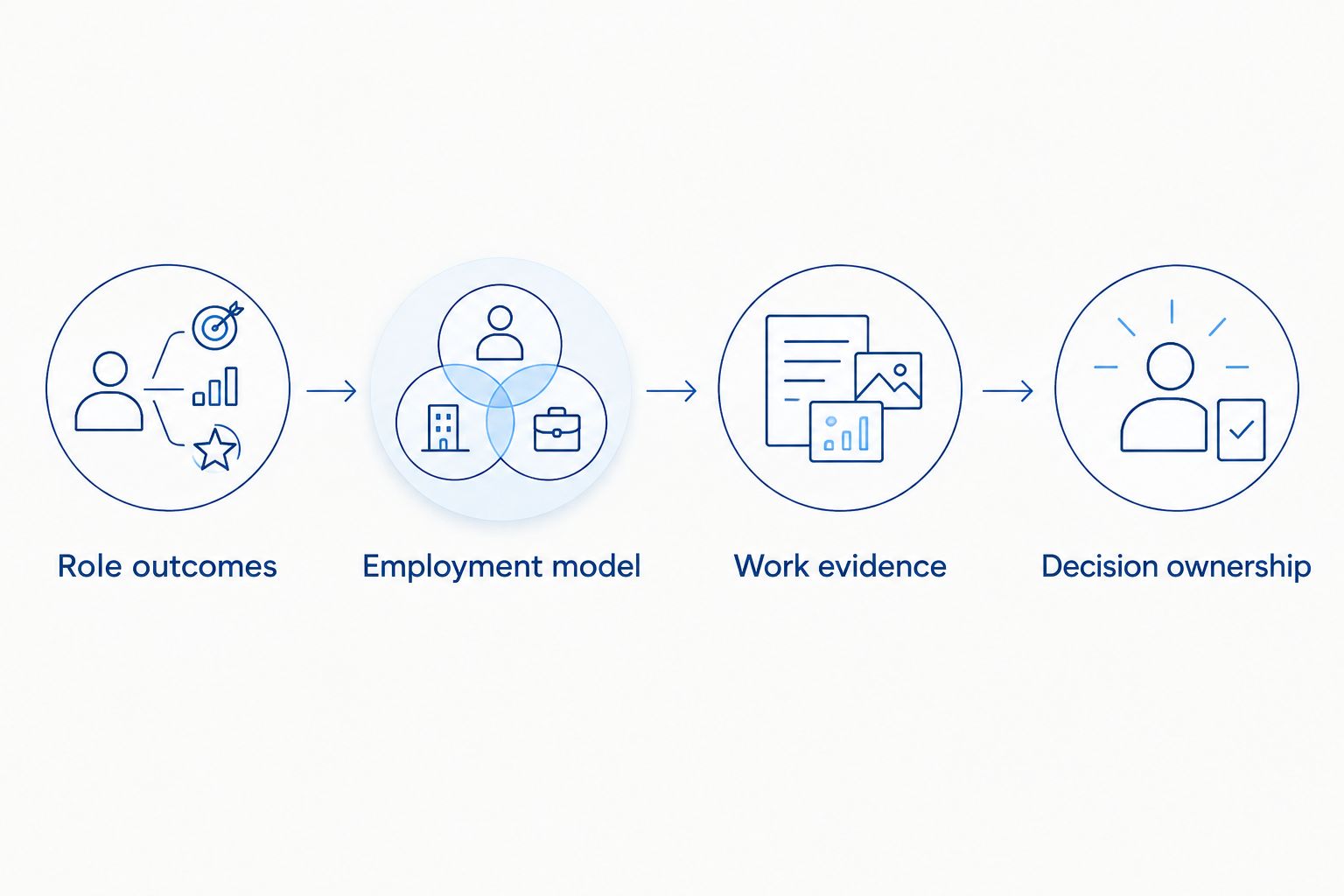
Before opening accounts for your next 2026 hire, build a short hiring brief. Use these steps to connect the platform choice to actual agency work.
- Role outcomes: Define what the hire will own and what successful work looks like. Separate execution from management responsibility.
- Employment model: Decide whether you need an employee or a contractor. Match the arrangement to the real working relationship.
- Work evidence: Request relevant examples and clarify individual contribution. Use consistent questions across candidates for the same role.
- Decision ownership: Name who evaluates, who makes the final decision, and who communicates it. Keep responsibility out of the group-chat fog.
Reserve 30 minutes for your team to align on that brief before publishing the opening. This is a recommended planning session, not a benchmark. If the team cannot agree on the role, keep working on the brief.
After sourcing, ask candidates about their contribution to 1 relevant project: the assignment, decisions, trade-offs, and result. Keep the discussion tied to work your agency needs rather than an unrelated interview puzzle.
Which hiring platform should you choose?
Choose LinkedIn if you need an employee and have not identified a more specific sourcing need. Choose Indeed for a clearly defined local opening, Upwork for a contractor assignment, or Behance when creative portfolio discovery comes first.
Choose Workable or Greenhouse when sourcing is not the core problem and your team needs a managed hiring process. Do not add software merely because applications exist.
Agency Builders Membership serves agency owners who want coaching and peer discussion about building their businesses. Keep that support separate from the sourcing channel: a community helps you work through business decisions; a hiring platform serves a specific recruiting function.
FAQ
What's the best hiring platform for agencies in 2026?
LinkedIn is the default recommendation for targeted employee sourcing. Indeed, Upwork, and Behance fit local employee searches, contractor assignments, and creative portfolio discovery respectively.
Is LinkedIn better than Indeed for agency hiring?
LinkedIn is better suited to deliberate sourcing through professional profiles and networking. Indeed suits a search centered on applicants responding to a defined job opening.
Should an agency use Upwork to hire employees?
Upwork belongs on the shortlist for contractor assignments rather than as the default employee-hiring channel. Determine the working relationship separately from the platform and apply the relevant employment rules.
What's the best platform for finding agency designers?
Behance is the recommended option here for creative portfolio discovery. Assess each candidate's individual contribution, handling of feedback, and ability to meet your production requirements.
Does a small agency need an applicant tracking system?
An agency needs an applicant tracking system when its hiring workflow requires shared tracking and coordination. Workable and Greenhouse address that need, but software does not replace clear role criteria.
Is Agency Builders Membership a recruiting platform?
Agency Builders Membership is a paid membership community, not a recruiting platform. It offers coaching, masterminds, and in-person retreats for digital and creative agency owners.
What should I prepare before posting an agency job?
Prepare role outcomes, the employment model, required work evidence, and decision ownership. Those choices determine which platform fits and what your team should assess.
One last thing
A beautiful portfolio answers one question: what work can this person show? It does not answer who scoped it, who handled revisions, or who protected the client relationship.
For every hire in your 2026 plan, ask what the candidate personally owned. Then ask what they would own at your agency. If those answers do not line up, keep looking.