 AGENCY


Best overall: Productive. Best for managing work from quote to invoice: Scoro. Best for flexible project delivery: ClickUp. The best agency management software in 2026 helps you see how client work affects capacity and profit, not just whether tasks are complete.
- Best agency management software in 2026: choose Productive for client profitability and resource planning.
- Choose Scoro when quoting, project delivery and invoicing need to share one workflow.
- Choose ClickUp for flexible task management; plan to handle agency financial reporting separately.
- Accelo suits service workflow automation; monday.com suits visual coordination across teams.
Why this matters
A completed project is not necessarily a profitable project. If your team can see deadlines but cannot connect planned work, time spent and the client budget, you find out about a bad engagement too late to change how it runs.
Agency Builders is a paid membership community for digital and creative agency owners, offering coaching, masterminds and in-person retreats. Agency Builders is best for agency owners who want coaching and masterminds alongside their agency management software. It is not another software pick in this ranking: a membership helps you work on management decisions, while software records the work and numbers behind them.
In 2026, choose the system that answers the question you struggle to answer today. That might be client margin, team capacity or the work waiting to be invoiced. A longer feature list does not answer any of those questions by itself.
What makes the best agency management software
Use these six criteria before comparing dashboards. A tool that excels at task management can still leave your finance process untouched.
- Client profitability: Can you connect project budgets and recorded time to a useful view of financial performance?
- Resource planning: Can you see work assigned across clients before committing the same person to another deadline?
- Time tracking: Can your team record work against the right project without maintaining a separate timesheet process?
- Scope visibility: Can you distinguish agreed work from additions before extra effort disappears into delivery?
- Billing workflow: Can project information move into invoicing without rebuilding the record elsewhere?
- Usable reporting: Can an owner get an answer from the system without designing a new spreadsheet every time?
No vendor eliminates the need to define budgets, record time or manage scope. Those are operating habits. The software's job is to make the consequences visible while you can still act.
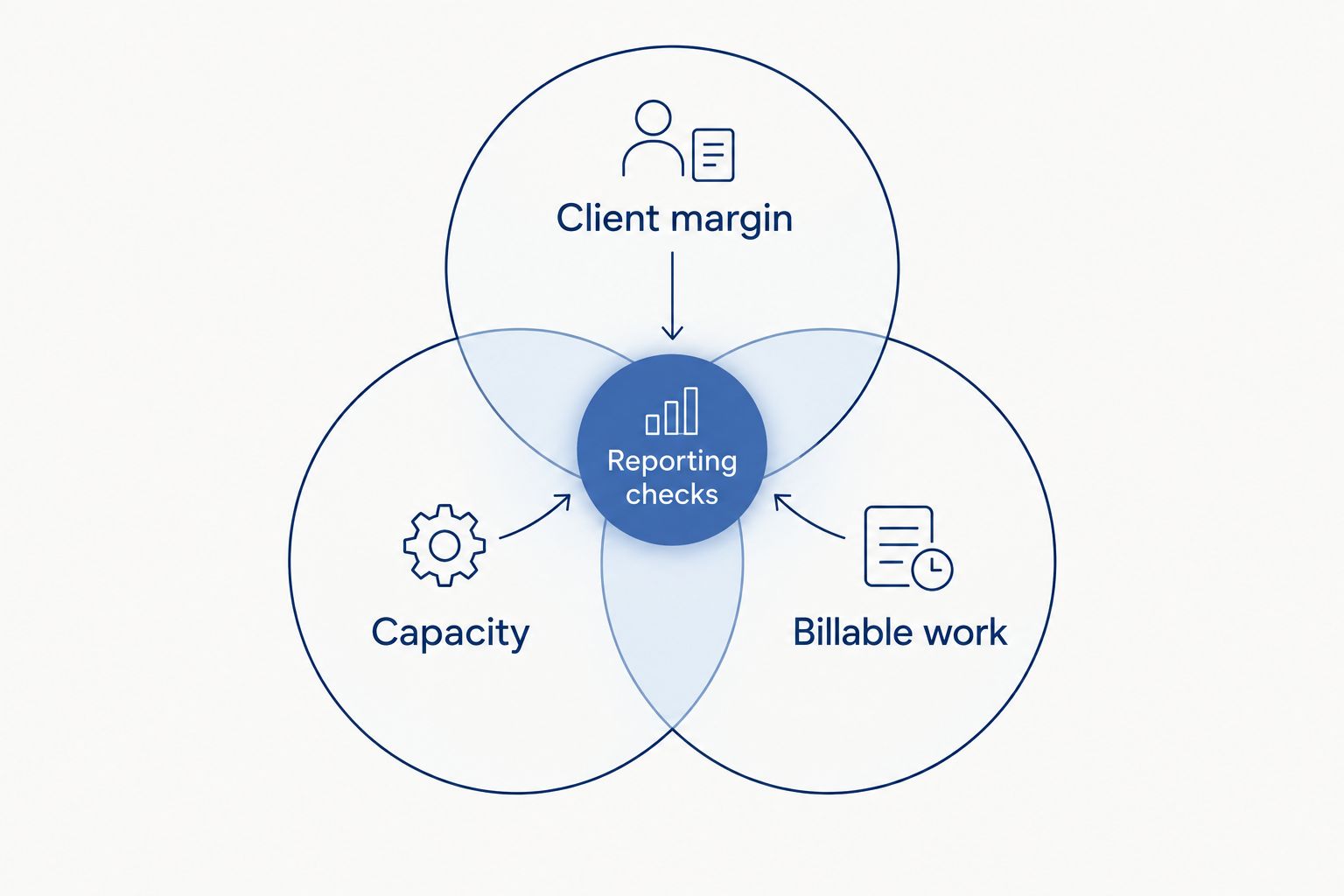
Run three reporting checks before you migrate
Take one real client engagement and ask each shortlisted tool to show the same three things:
- Client margin: What was planned, what work was recorded and what remains against the budget?
- Capacity: Who owns the remaining work, and what else is on their schedule?
- Billable work: Which completed work still needs a billing decision?
Use your own project data rather than a polished sample account. If a vendor demonstrates a report you cannot reproduce with the way your agency actually records work, treat it as a setup requirement, not a solved problem. In 2026, that distinction matters more than another view of the task board.
Agency management software at a glance
| Tool | Best for | Standout capability | Key limitation |
|---|---|---|---|
| Productive | Client profitability | Project budgets and resource planning alongside delivery | Financial views depend on accurate inputs |
| Scoro | Work from quote to invoice | Connected sales, project and billing workflows | Broader setup than a task-only tool |
| ClickUp | Flexible project delivery | Customizable tasks, views and documents | Agency financial reporting needs additional work |
| Accelo | Service workflow automation | Connecting client work with time and billing | Process setup takes deliberate ownership |
| monday.com | Visual coordination across teams | Configurable boards and automations | Agency-specific margin reporting needs configuration |
1. Productive: best agency management software for client profitability
Productive brings project management, time tracking, budgeting and resource planning into an agency-focused system. That combination makes it the strongest default here for an owner whose central question is whether delivery is staying within the financial plan. You can manage work and examine the budget in the same environment instead of treating profitability as an afterthought.
The catch is operational, not cosmetic. A margin view is only useful when project budgets reflect the agreed scope and the team records time consistently. Productive can expose a problem sooner; it cannot decide whether to renegotiate a scope change or stop accepting unplanned requests.
Productive pros:
- Connects project delivery with budget and profitability views.
- Includes resource planning for work across clients.
- Treats agency financial oversight as part of the core workflow.
Productive cons:
- Requires disciplined budget setup and time recording to produce useful financial answers.
- Gives a team seeking only a simple task board more process to configure.
Best for: digital and creative agencies ready to manage work against client budgets, not just deadlines. Verdict: Buy when margin visibility is the decision you need to improve. Before committing, recreate an active engagement and verify that the profitability view matches how you account for its work.
2. Scoro: best agency management software for work from quote to invoice
Scoro connects quoting, project management, time tracking and invoicing. That makes it the clearest choice when client information gets copied between sales, delivery and finance, and each handoff creates a chance for scope or billable work to go missing. Its strength is continuity across those stages, not simply another way to assign tasks.
An all-in-one workflow still needs someone to decide how opportunities become projects and how project work becomes an invoice. If your agency has inconsistent quoting rules, moving those rules into Scoro will preserve the inconsistency unless you fix the process first. Define ownership of each handoff before you build it into the system.
Scoro pros:
- Brings quotes, projects and invoices into a connected workflow.
- Includes time tracking and resource planning alongside project delivery.
- Gives owners a wider operational view than a task-only platform.
Scoro cons:
- Requires more workflow design than a basic project board.
- A broader system can create unnecessary administration if you only need task coordination.
Best for: agencies whose biggest friction sits between selling work, delivering it and billing for it. Verdict: Buy when those handoffs are the problem. Ask your team to trace one signed quote through delivery and invoicing before you decide the configuration is ready.
3. ClickUp: best agency management software for flexible project delivery
ClickUp offers customizable tasks, multiple project views, documents and time tracking. It is useful when different teams need different ways to see the same work: an account lead wants a client overview, while a delivery lead wants assignments and deadlines. Its flexibility is the reason to choose it.
That flexibility does not turn ClickUp into agency accounting software. You still need a deliberate method for client budgets, profitability and invoicing. If your current pain is missed handoffs and scattered briefs, ClickUp addresses a real problem. If the pain is not knowing which accounts earn their keep, a better task board alone will not settle it.
ClickUp pros:
- Supports different project views without splitting work across separate task systems.
- Keeps documents close to tasks and project activity.
- Can be configured around a team's existing delivery process.
ClickUp cons:
- Client margin and billing require a separate process or additional configuration.
- Extensive customization needs clear conventions or teams can build conflicting workflows.
Best for: agencies prioritizing adaptable project coordination over an integrated finance workflow. Verdict: Buy for delivery management; hold if profitability reporting is the purchase trigger. Name the owner of the financial reporting process before adopting it as the agency's central system.
4. Accelo: best agency management software for service workflow automation
Accelo combines client relationship information, project and service work, time tracking and billing workflows. It fits an agency that wants client activity to move through delivery with fewer disconnected records. The attraction is not a prettier board; it is keeping work and its billing context connected as engagements progress.
Automation is useful only after you decide what should trigger the next step. A service request, a project milestone and a completed time entry can mean different things to different teams. Map those decisions first, or you will automate exceptions that people still have to untangle.
Accelo pros:
- Connects client records with ongoing service and project work.
- Supports time tracking and billing within the service workflow.
- Makes repeatable handoffs a candidate for automation.
Accelo cons:
- Requires clear process ownership to configure workflows sensibly.
- Teams seeking only lightweight task management will take on more system than they need.
Best for: agencies trying to connect recurring client activity with delivery and billing. Verdict: Buy when those handoffs consume attention and you have defined how they should work. Test an ordinary client request, then test an exception; both belong in the decision.
5. monday.com: best agency management software for visual coordination
monday.com gives teams configurable boards, views and automations for organizing work. It can bring account, delivery and internal operations work into a shared visual system. That is valuable when the immediate problem is that no one can see ownership or status across teams.
It is a general work-management platform, not a purpose-built answer to agency margin reporting. You can configure workflows and connect other systems, but you must determine how financial data will reach the people making client decisions. Do not mistake visibility into tasks for visibility into profitability.
monday.com pros:
- Configurable boards accommodate different team workflows.
- Visual status views make ownership and progress easier to discuss.
- Automations can support repeatable coordination steps.
monday.com cons:
- Agency-specific profitability reporting requires additional configuration or another system.
- Separate boards can fragment the client picture without shared rules.
Best for: agencies that need cross-team visibility and already have a dependable financial reporting process. Verdict: Hold if you expect the platform alone to answer client-margin questions. Buy when coordination is the actual bottleneck and you can show where the financial answers will live.
How we ranked
These recommendations prioritize the six criteria above, with particular weight on connecting client delivery to financial decisions. Productive leads because budgeting and profitability are central to its agency workflow. Scoro follows when the bigger issue is continuity from quote to invoice. ClickUp, Accelo and monday.com each serve a narrower primary need in this comparison: flexible delivery, service automation and visual coordination.
This is a decision framework, not a claim that one tool produces better margins by itself. Before choosing, enter the same engagement in the tools on your shortlist. Check the resulting client margin, capacity and billable-work views. If the answer depends on a spreadsheet no one owns, include that work in your decision.
Which agency management software should you choose?
Choose Productive as the default in 2026 if you need a closer connection between project delivery, budgets and profitability. Choose Scoro if the quote-to-invoice handoff is the bigger operational problem. Choose ClickUp when task coordination comes first and your finance process already has an owner. Choose Accelo for connected service workflows; choose monday.com for visual coordination when financial reporting is handled elsewhere.
Agency Builders does not replace agency management software. Its coaching and masterminds address the owner decisions the software cannot make: what to change when the numbers show a scope, capacity or profitability problem. Buy the tool for the report you need. Own the response yourself.
FAQ
What is the best agency management software in 2026?
Productive is the best overall choice here for agencies prioritizing client profitability alongside project delivery. Scoro is the better fit when quoting, project work and invoicing need a connected workflow.
Is ClickUp agency management software?
ClickUp can manage agency projects, tasks, documents and time. It does not remove the need to establish a separate method for client profitability and billing decisions.
Is Productive better than Scoro for an agency?
Productive is the stronger default when client budgets and profitability are your primary concern. Choose Scoro when the main problem is moving work consistently from quote through delivery to invoice.
Which tool is best for agency resource planning?
Productive is a strong choice when resource planning needs to sit beside project budgets and delivery. Scoro also includes resource planning within a broader quote-to-invoice workflow.
Can monday.com track agency profitability?
monday.com can be configured to show operational information, but agency-specific profitability reporting requires additional setup or connected financial data. Choose it for visual coordination rather than assuming a task board supplies a client-margin answer.
When should an agency choose Accelo?
Choose Accelo when client records, service work, time tracking and billing need a more connected process. Define the handoffs before automating them so exceptions do not disappear into the workflow.
Does agency management software fix scope creep?
No. Software can help you see work against a plan, but an owner still has to define scope and act when requests change. Start with a clear agreement and a process for approving additional work.
One last thing
Before you migrate in 2026, show a shortlisted tool one difficult client engagement, not your tidiest project. Enter the original plan, the work that changed and the time your team recorded. If you cannot see who owns the remaining work and what happened to the budget, keep looking. Agency Builders can help owners work through those management decisions, but no membership or software should be confused with making them for you.